Our expertise

We provide customized services in 3D simulation, visualization, and optimization of surgical interventions involving soft tissues and facial or body contours. Our expertise includes 3D soft-tissue simulation for breast augmentation and cranio-maxillofacial surgery, custom implant design (e.g., breast, chin, cheek, and orbital implants), 3D data processing and printing, as well as air and fluid flow simulation, for example, for the quantitative assessment of obstructive sleep apnea (OSA). Unlike simplified visualization tools, our surgical simulations are based on physical modeling of biomechanical soft-tissue behavior. This approach allows us to generate visualizations of potential postoperative outcomes and to provide quantitative data that can support surgical planning and the translation of virtual simulations into surgical procedures. Our technology has been continuously developed for more than 20 years and has been applied in numerous clinical studies. In addition, we offer customized solutions for data and image processing using conventional and ML/AI-based methods.


Breast augmentation


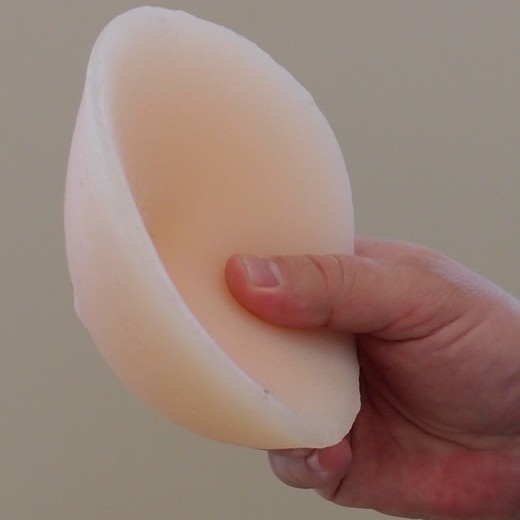
Preoperative assessment of the potential aesthetic outcome is an important aspect of surgical planning and patient communication. Breast augmentation simulations can be performed using individual 3D scans or a series of 180° rotational photographs. These simulations allow different augmentation scenarios to be visualized, including different implant types and implant positions. They also provide complementary quantitative data, including key distances and measurements relevant to implant placement and the position of the inframammary fold. These additional data can assist surgeons in assessing different surgical options and translating the selected plan into the surgical procedure. The approach has been evaluated in the context of surgical planning and can facilitate communication between surgeons and patients, providing a common visual basis for discussing different treatment options and their potential outcomes.
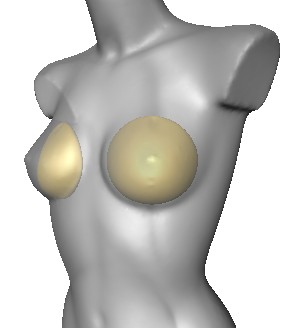
Example of 3D simulation for breast augmentation planning


Cranio-maxillofacial surgery


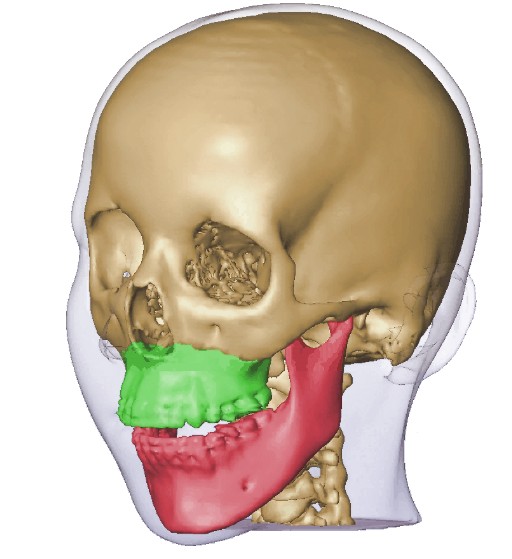
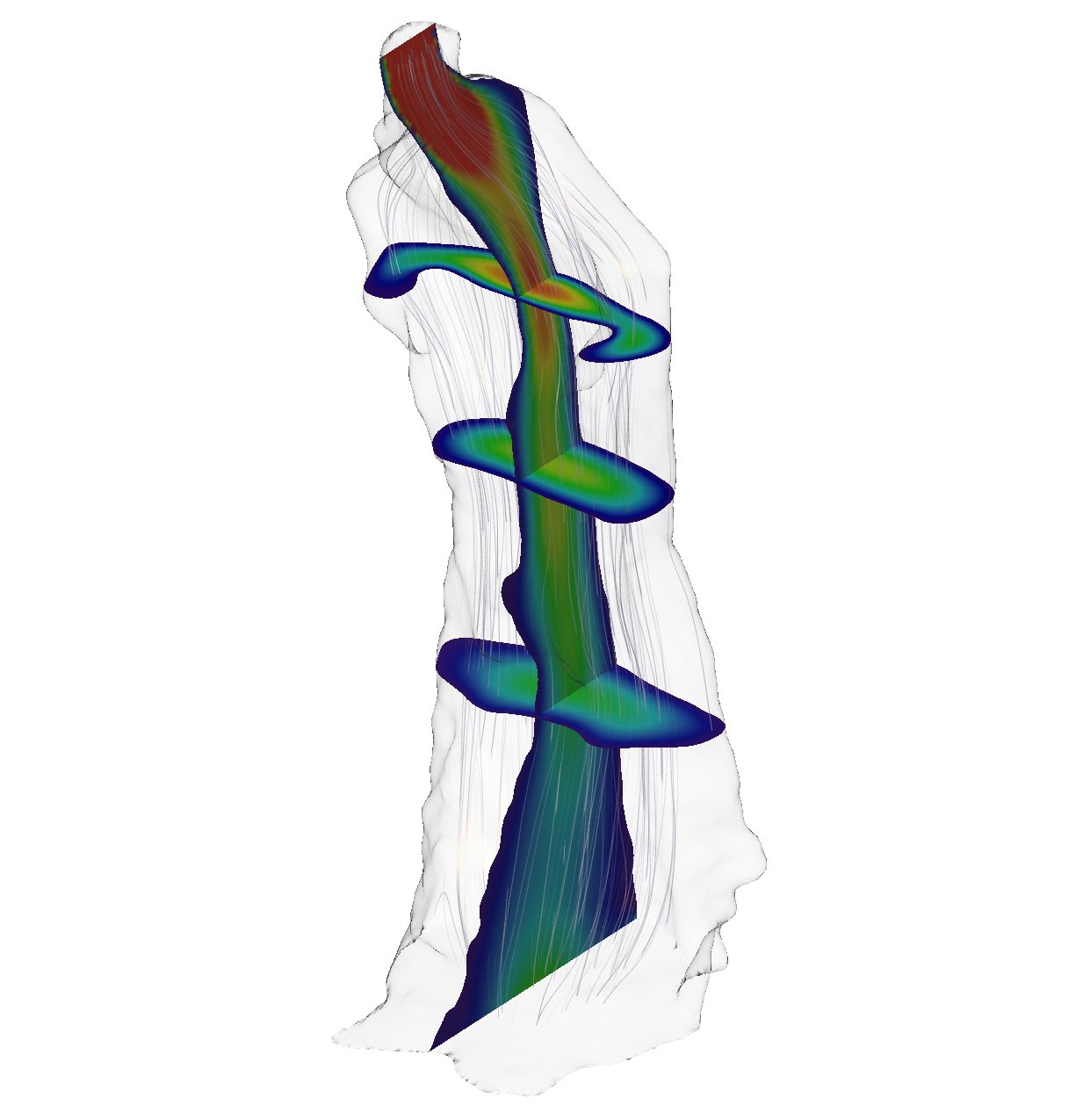
Simulations of cranio-maxillofacial (CMF) surgery outcomes are typically based on 3D CT or MRI data. They include visualizations of alternative surgical scenarios, together with quantitative information such as the displacement of bony and soft-tissue structures. While the surgical plans for CMF corrections are generally well defined from a surgeon’s perspective, the effects of bone movements or implants on the soft tissues and postoperative facial appearance can be more difficult to assess. Our computer simulations can be used to explore potential aesthetic and functional outcomes of different CMF surgical scenarios. Beyond soft-tissue simulation, aerodynamic simulations can also be performed to assess the effects of airway enlargement following maxillomandibular advancement on pharyngeal airflow. This is particularly relevant to the surgical treatment of obstructive sleep apnea (OSA).


Example of cranio-maxillofacial 3D surgical planningExample of pharyngeal airflow simulation


Custom implant design


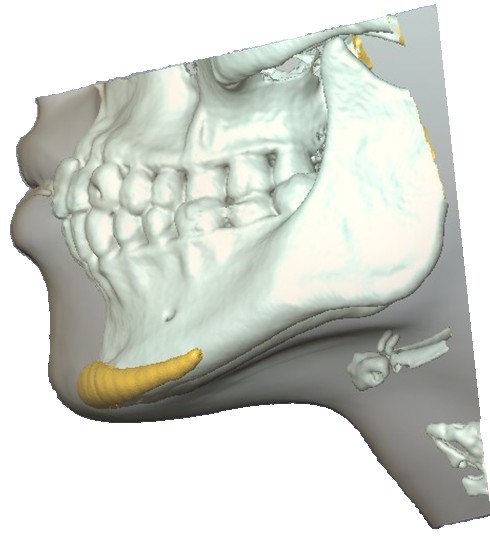
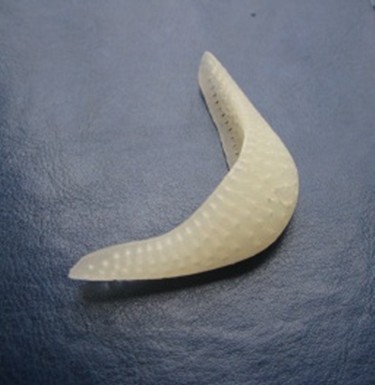
In addition to simulating the effects of surgical corrections using prefabricated implants, we offer a specialized service for custom implant design. The computer-assisted design of custom implants, with the aim of achieving defined effects on soft tissues and facial or body contours, typically relies on 3D CT or MRI data. This process is based on solving an inverse problem, in which the implant shape is derived from a desired aesthetic outcome. In other words, the desired outcome serves as the starting point for determining an appropriate implant geometry. Our approach to the inverse design of custom implants has been evaluated in various surgical applications, including breast, chin, cheek, and orbital implants.


3D visualization used for custom implant designExample of patient-specific implant modeling


3D scanning / 3D printing

Do you need a virtual model of a real object or a physical copy of a digital model? We offer comprehensive services in 3D scanning, virtual model generation, 3D printing, and rapid prototyping of both original and custom-modified 3D objects and structures. Upon request, 3D scanning can also be performed on site. For 3D printing, a range of hard and soft materials is available. Before printing, models can be enhanced, miniaturized, or customized according to specific requirements. Data sources for 3D model generation and printing include 3D tomographic images, surface scans, and series of 2D images acquired during 360° rotation. For the generation of virtual 3D models from physical objects, physical samples can be sent to us by mail. Please feel free to contact us with any questions or specific requirements.


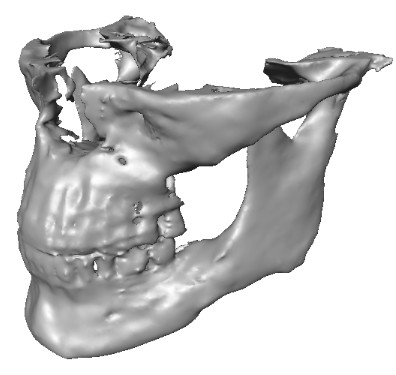
Example of a digital 3D anatomical modelExample of a 3D model prepared for manufacturing


ML/AI-based data and image analysis


In addition to our specialized services in surgical simulation and 3D modeling, we also provide customized solutions for more general data and image analysis using conventional computational methods as well as machine learning and artificial intelligence. These approaches can facilitate the automated analysis, generation, processing, and mining of heterogeneous data, including text, images, and numerical datasets. Depending on the application, methods can be tailored to identify patterns, extract relevant information, classify or structure data, and support the generation of new content or derived data. Our services are adapted to the specific requirements of each project and can include the development and evaluation of custom workflows for complex or application-specific data analysis tasks.


Illustration of ML and AI-based data and image analysis


Contact


Please do not send sensitive patient or medical data through this form.


_____________

More to come...